File Search
Vicinae integrates with your filesystem in order to provide you with snappy file search.
This page describes how it works and how to get the most out of it.
Environment support
By default, Vicinae will use whatever the default file search provider is on the running platform:
- on macOS, it uses Spotlight directly
- on Linux, Vicinae comes with its own file indexing solution
At the moment, it is not possible to run the custom file indexer solution on anything other than Linux.
Search files
You can search files in one of two ways:
- From the root search, only if the relevant option has been explictly enabled in the main Vicinae settings. Root file search is performed asynchronously so you should expect a slight delay before file results show up.
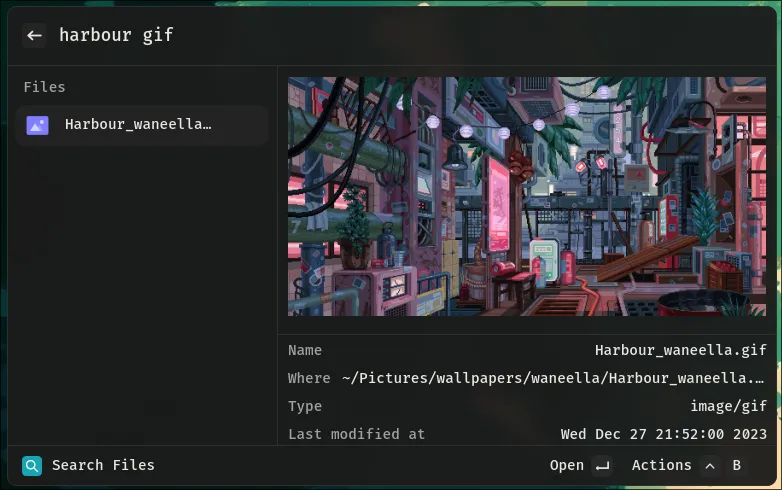
- Using the dedicated Search Files command, which provides a nice preview of the file's content and generally more actions.
Spotlight (macOS)
Linux (custom file indexer)
Vicinae will start a full scan on first startup.
A full scan will go through every single file and directory present at the configured search locations and index them. By default, we only index the contents of the home directory.
It is expected for Vicinae to use a lot of CPU during initial file indexing, as the priority is to build the base index as fast as possible. Subsequent indexing is done incrementally and is way less CPU intensive.
Search paths
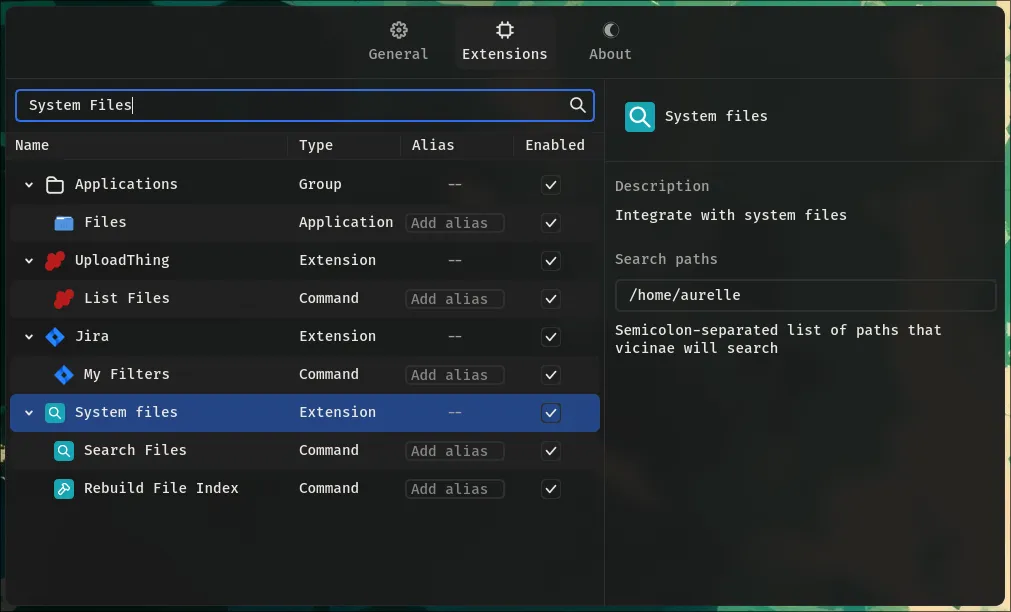
By default we only search files and folders that are under the current user's home directory.
You can change the list of searched locations from the file search extension settings:
Adding new search locations might trigger new indexing tasks immediately.